THE SHORT ANSWER
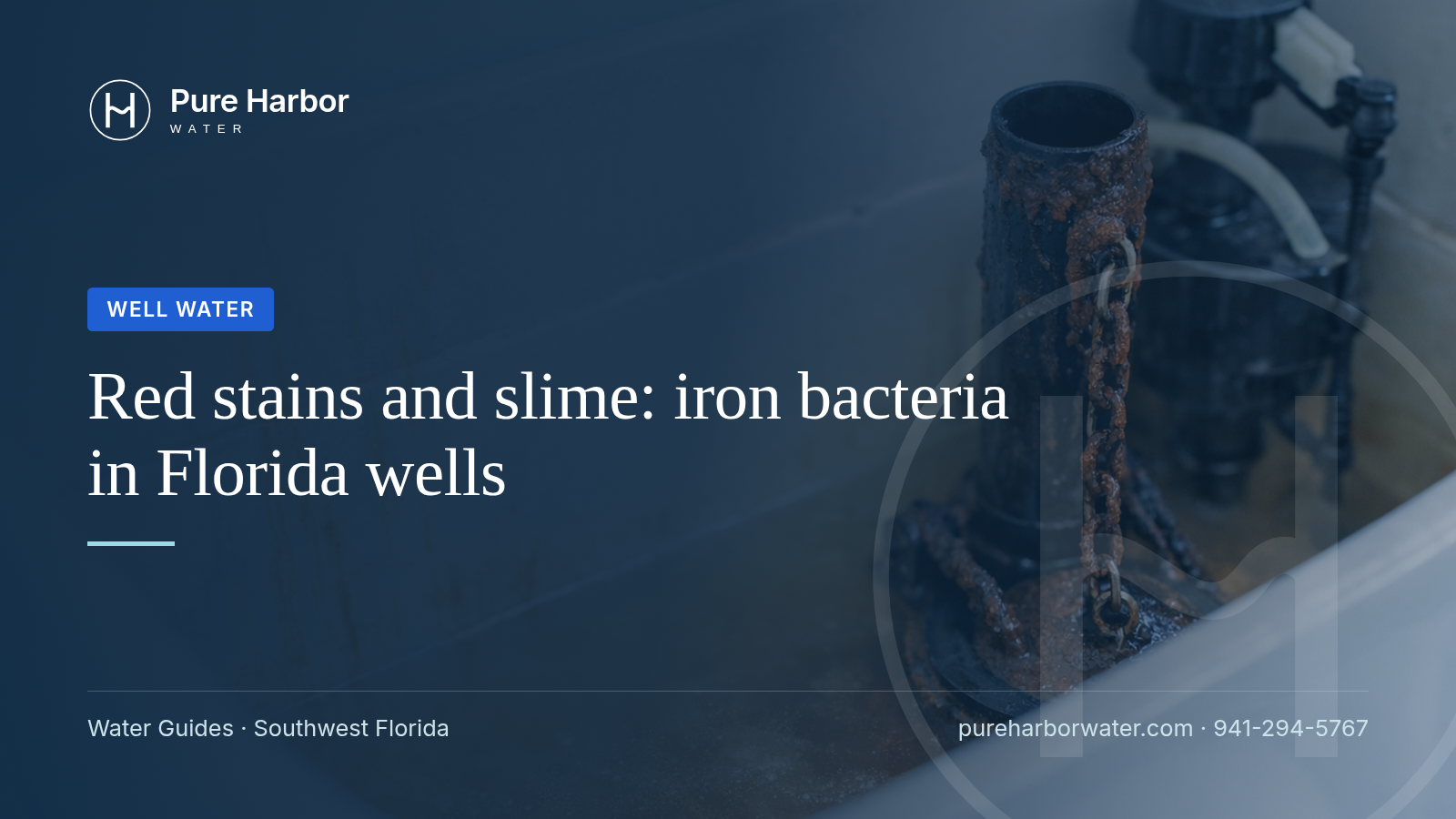
If your private well gives you red or orange stains, a swampy or oily smell, or red, slimy growth in the toilet tank, the Florida Department of Health says your well or plumbing may have iron bacteria. They are nuisance bacteria that combine iron (or manganese) with oxygen to form rusty slime. DOH says they are not known to cause disease, but they can clog a well and may create conditions where disease-causing bacteria grow, so test for coliform bacteria too (FL DOH odor and staining fact sheet, PDF). Coverage: well water treatment.
FAQ (quick)
- Is iron bacteria harmful? DOH says iron bacteria are not known to cause disease, but they may create conditions where disease-causing bacteria can grow.
- What does it look like? Yellow, orange, red or brown stains or colored water, and sticky slime that is usually rusty but can be yellow, brown or grey.
- What does it smell like? People describe it as swampy, oily or petroleum, cucumber, sewage, rotten vegetation or musty (DOH).
- How is it treated? For heavy growth, DOH says the pump is usually pulled and cleaned by a certified water well contractor or pump installer. Chemical treatment, most often household chlorine bleach, is the most common method (DOH).
- Will an iron filter fix it? Not on its own. The well and plumbing usually need cleaning and disinfection first; treatment equipment comes after testing.
Signs you may have iron bacteria
The DOH fact sheet lists three clues:
- Red stains in sinks, tubs or laundry.
- Swampy, oily or other unpleasant tastes or smells, often stronger when the water has not been used for a while.
- Red, slimy or "feathery" growth, especially in standing water like a toilet tank.
DOH also warns that some of these signs can come from other causes: sulfate, hydrogen sulfide, manganese, corroded pipes or sulfur bacteria. That is why we test before we recommend equipment. If you're seeing stains but not slime, read rust stains vs. hard water. If the main problem is a rotten-egg smell, see sulfur water treatment in North Port.
Iron bacteria vs. dissolved iron vs. tannins
| What you see | More likely cause | First step |
|---|---|---|
| Red or brown slime, smell worse after water sits | Iron bacteria (DOH) | Well inspection and disinfection; coliform test |
| Clear water that turns orange after it sits in a glass or stains fixtures | Iron in the water | Lab test for iron and manganese |
| Yellow or tea-colored water that stays colored in a glass overnight | Possibly tannins | See tannins and yellow well water |
These are rules of thumb, not a diagnosis. A certified lab result settles it.
How iron bacteria are treated
According to Florida DOH:
- Physical cleaning comes first when growth is heavy. The pump is pulled and cleaned and the casing is scrubbed. DOH says this is usually a job for a certified water well contractor or pump installer.
- Chemical treatment is the most common method. The three common groups are surfactants, acids (and bases), and oxidizers such as disinfectants. Household chlorine bleach is the disinfectant used most often.
- Other options include aeration, oxidation and adsorption on activated carbon, which help with the taste and odor compounds.
- Expect follow-up. DOH notes high levels of iron bacteria "may be tricky and costly to treat," and treatment may only partly succeed.
Where we fit: once the well itself has been cleaned and disinfected, we can help plan point-of-entry treatment for what is left, based on your lab results. See well water treatment and, in Charlotte County, Port Charlotte well water service.
Test before and after
DOH recommends testing a private well at least once a year, and more often if the taste, odor or color changes, and after disinfection. For how to collect and handle a sample, see planning a private well lab sample. If a coliform test comes back positive, read what to do after a positive coliform test. Local county fees are in water testing cost in Sarasota and Charlotte County.
FAQ
Can iron bacteria come back after shock chlorination? Yes. DOH says treatment may only partly succeed when levels are high, so plan to retest and watch for the slime and smell returning.
Does iron bacteria mean my well water is unsafe? Not by itself. DOH says iron bacteria are not known to cause disease, but they can create conditions where other bacteria grow. Test for total coliform and E. coli to check safety.
Who should clean my well? DOH points to a certified water well contractor or pump installer. You can look up licensed contractors through the Florida Department of Environmental Protection.
Can a water softener remove iron bacteria? We don't claim it does. Clean and disinfect the well first, then size treatment from a lab test.
Do you serve North Port and Port Charlotte wells? Yes. Schedule an in-home water check or call 941-294-5767.
Next step
An in-home water check can help plan treatment. It is not a substitute for certified laboratory testing for bacteria. Schedule an in-home water check or call 941-294-5767.
Sources
A PRACTICAL NEXT STEP
Well-water planning, explained.
Build a treatment plan around your well, your concerns, and appropriate testing.
Explore this solution